Tuesday, March 25, 2014

THREE FIFTHS AGAIN

Massachusetts has arrived, somewhat by accident to be sure, at state funding ratios for the three public higher education segments: University of Massachusetts campuses, the nine state universities and the fifteen community colleges.  Not surprisingly funding reflects status; the University of Massachusetts campuses are on top in per student funding, followed by the state universities with the community colleges bringing up the rear.  Interestingly, the ratio of state support per FTE student varies in a simple way.  Community colleges received $3357 roughly three-fifths of that disbursed to the state university undergraduates and they in turn receive $5267, three-fifths of that given to support the University of Massachusetts students that amounts to $8685.

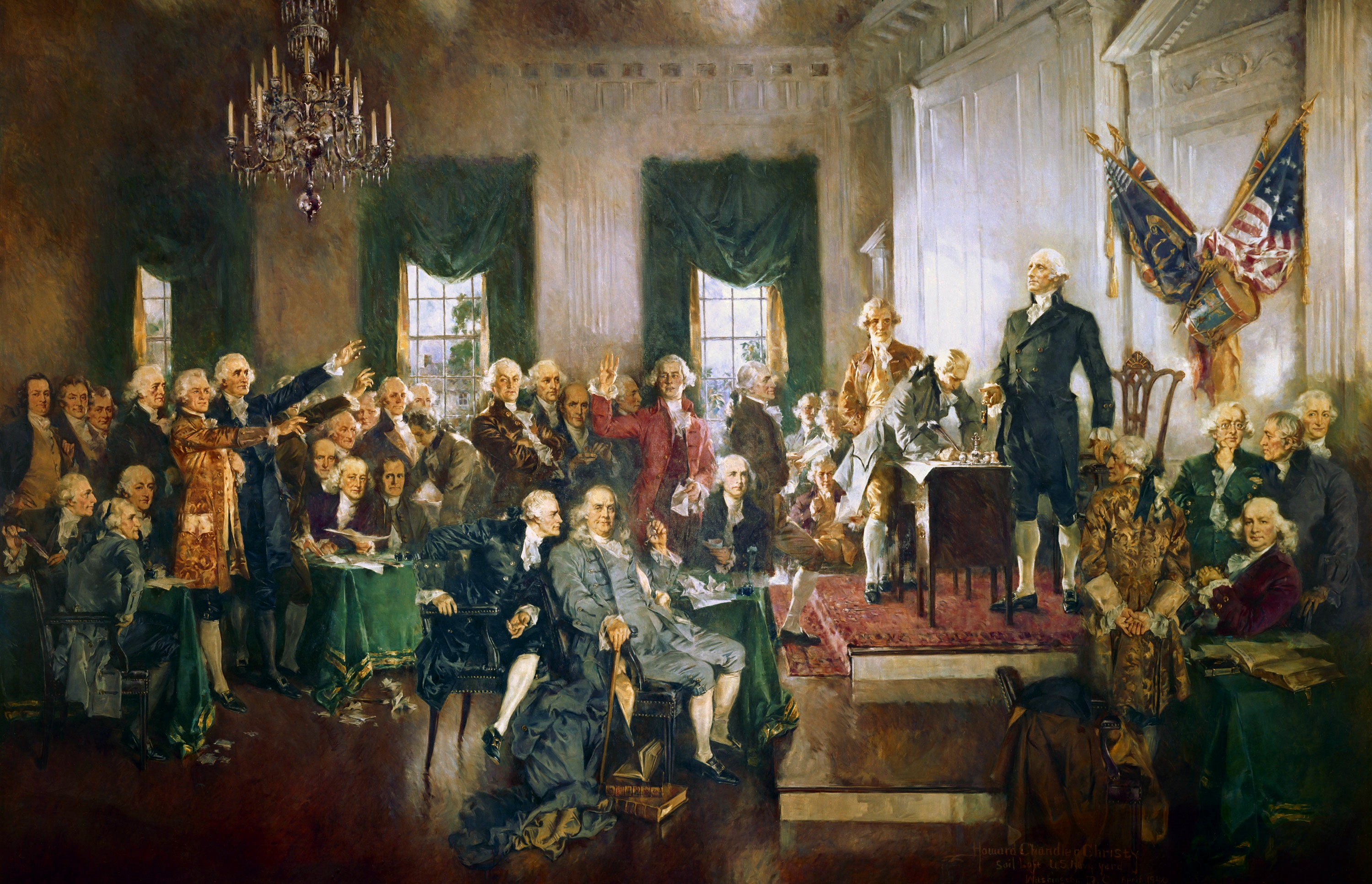
Howard Chandler Christy (1873–1952) Scene from the Constitutional Convention. Source: Wikipedia Commons

That ratio, three-fifths, made me think of a famous three-fifths in American history, the three-fifths compromise during the US Constitutional Convention.  That compromise gave the southern states the right to count slaves as three-fifths of person for the purpose of political apportionment in the US Congress, despite the fact that slaves could not be citizens, could not hold property and could not vote. 


Clearly we have moved a long way in the five generations since the civil war that abolished slavery.  Yet the unequal support of Massachusetts community college students, predominately low to moderate income and many of color, show that we still have a way to go to address old patterns of power and privilege.  Is there a justification for the Commonwealth to give less state support to one group of public higher education students compared with others?  I look forward to that debate.

Saturday, March 1, 2014

HOW TO HARNESS CREATIVITY TO IMPROVE HIGHER EDUCATION


Since the Great Recession that began in 2008, public colleges and universities are under increased financial pressure caused by reduced state and local government support. At the same time, private colleges and universities, especially those who are not in the elite class - also find themselves in financial straits as median US family income stagnates while their costs and the cost of attendance has continued to escalate faster than overall consumer prices.  Although all of these institutions have reacted by dramatically raising tuition and student charges, this strategy has resulted in higher student debt and push back from students, parents and government leaders. 

To balance the books, any organization has two choices - increase revenue or decrease costs.  Most college leaders argue that it is very difficult to do reduce or significantly moderate the growth in expenses since their costs are driven primarily by employee salaries that typically constitute eighty to eighty-five percent of their budgets.  Thus most Americans believe, not incorrectly, that the cost of college, like health care, is out of control.

Many companies have discovered ways to utilize the creativity of their employees to improve efficiency while reducing costs. The secret is to implement an idea system that encourages employees to make suggestions of how to change operations, usually in an area that the employee has direct knowledge and engagement.  Organizations that have adopted idea systems include major manufacturing concerns, airlines, banks, hotels and health care organizations.  

Why has higher education been resistant to this possibility?  To quote Tevya from the play Fiddler on the Roof, TRADITION.  As Roger Moe, a Minnesota State Legislator observed, " Higher education is a thousand years of tradition wrapped in a hundred years of bureaucracy.  Mr. Moe was accurate: the oldest continuing operating university in the world is the University of Bologna founded in 1088.  And even in the United States, a number of major universities trace their origins from well before the American revolution of 1776 including: Harvard founded 1636, William and Mary 1693, St. John's College 1696,Yale University 1701, University of Pennsylvania 1740, Moravian College 1742, University of Delaware 1743 and Princeton University 1746.          

Moreover, all American Institutions of higher education trace their origins to the Middle Ages witnessed by graduation ceremonies that display medieval gowns, hats and decorations.

Tradition takes other forms in American higher education. The curriculum, especially that in the liberal arts harkens back to the Middle Ages as well as the organization of these institutions with the primacy of the faculty, the separation into distinct disciplines, the collection of credit through a series of courses.  That is not to say that many of these traditions are useful and even essential to the well-functioning of institutions that have survived for decades and centuries.  However, tradition accompanied by inertia is a powerful force to resist change.

Motivated by the desire to improve the education for our students while controlling costs, for over two years, Springfield Technical Community College has been experimenting with an idea system.  While the President of the college proposed adopting this initiative, some cherished management views often not explicitly stated had to be jettisoned.  The most significant was the principle that the administrators and the faculty in the area of instruction understood how to run an effective institution. From this perspective, the administration responsible for the institutions finances, had the knowledge and tools to advance efficiency and find ways to control costs.  How could this not be true?  A look at the pyramid below is instructive.  This diagram shows the organization as consisting roughly of 20% managers and supervisors, and 80% of employees who provide direct service to students and internal customers - faculty, counselors, student support staff in the registrar's office, admissions and financial aid, counselors, maintenance personal, custodians.  This is not an exhaustive list but should include all employees who see individual transactions between their departments or offices and students or other constituents including parents. 


Now here is the crucial observation.  Administrators by and large do not see individual transactions, the ongoing work of the organization such as the interaction between students and faculty in the classroom, the communication about an individual application with the financial aid office and the like.  Administrators see rolled up data, aggregated information such as the total number of students in a particular major, the number of students who received financial aid.  If these numbers are stable or increasing, the administration is generally pleased.  However, administrators, those in the twenty percent of the pyramid, are not privy to these individual transactions and therefore cannot suggest incremental improvements.  The people on the front lines, the eighty percent can do that.  And since they do most of the work and make up the greater part of the organization, their creativity and willingness to seize opportunities for improvement can over the long term cause improvements.
Sunday, February 23, 2014

HIGHER EDUCATION OR HIGH COST EDUCATION


A STCC engineering student and his father spoke to me recently about transfer to a four-year engineering program.  (I should explain that STCC teaches the first two years of a standard engineering curriculum preparing students such as this one to complete at a baccalaureate school.)  We talked about transfer choices and then the conversation turned to the cost of college.  The father explained he had four children that he wanted to send to college.  The only way that he thought he could afford to do so was by first sending them to a local community college and then have each transfer as juniors to a public or private four-year school.

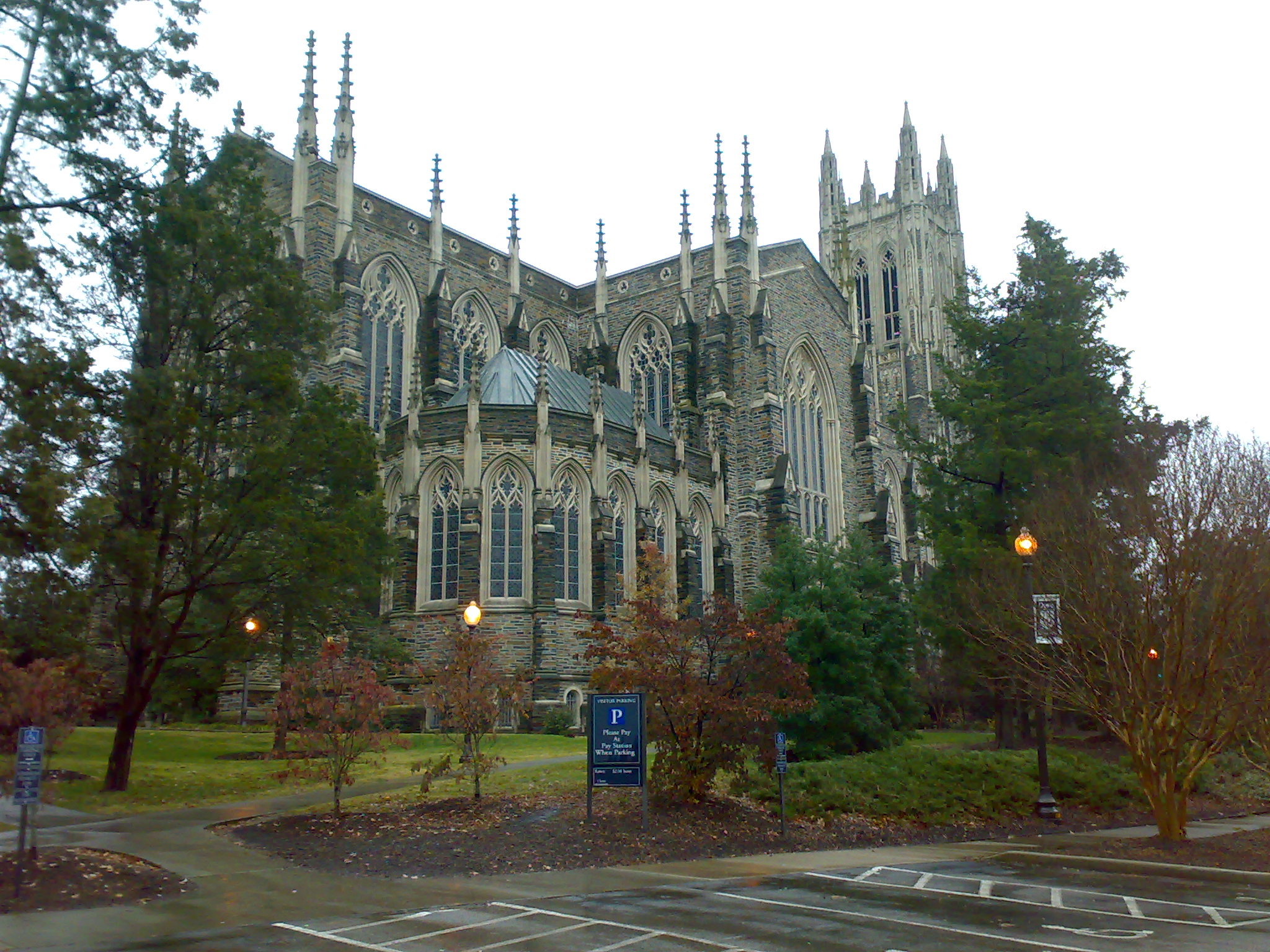
This middle class family’s dilemma was highlighted by a National Public Radio story on February 21 that reported the cost to an undergraduate of attending Duke University has passed $60,000. 

Goodson Chapel, Duke University Divinity School.  Source:Wikipedia


Moreover, according to NPR, Jim Roberts, Duke’s executive vice provost, claims that the yearly cost of educating a student at Duke is $90,000.  While it is difficult to ascertain the validity of Roberts’ assertion, both of these numbers should shock the typical parent in the US where the median family income is $51,000.  

In fact, the Gallup poll on money worries for middle age Americans 30 to 49 lists paying for one's children’s college just behind not having enough money for retirement and not being able to pay for medical costs in the event of a serious illness or accident. (59% worry about cost of college, 68% retirement and 63% medical costs)

Public colleges and universities were designed to provide a less expensive alternative than the private higher education institutions.  But even here, the great recession of 2008 has forced public institutions to raise prices dramatically to make up for cuts in state funding.  For example, the flagship public university in my state, the Amherst campus of the University of Massachusetts, charged $23,258 in 2013-14 consisting of $13,258 in tuition and $10,439 in room and board. While these numbers are small compared with Duke’s, tuition alone is more than a quarter of median US family income.


Community colleges with relatively low tuition costs are perhaps the only alternative to many families.  At STCC cost of attendance is $5100 per year, about 40% of tuition at UMass/Amherst, and a small fraction of a private school like Duke.  As US middle class income stagnates and college costs inexorably rise, enrolling at a community college and proving oneself academically has become a much more attractive path to a college degree.

Friday, January 17, 2014

FULL TIME LEADS TO MORE GRADUATES

New evidence shows that programs that enable community college students to attend full-time dramatically increases graduation rates.  As reported recently In the Atlantic Monthly and New York Times, the Accelerated Study in Associate Program (ASAP) at NYC community colleges has doubled or tripled rates.

The key is to keep students in college full-time.  While this is the model for baccalaureate education, at community colleges, most students attend part-time and many drop out for periods of time.  This delays their completion of a degree and, in many cases, results in never finishing. 

Although students at community colleges have a number of barriers, primarily financial, that prevent full-time attendance, as the ASAP initiative shows, those impediments can be overcome.  Students who sign up for the program are given an advisor who meets with them regularly and tracks their progress.  Students must attend full-time in the fall and spring semesters.  Cost of full-time college is not a barrier: If the student cannot afford the full-time tuition, the college waives the deficit. Moreover, students are encouraged to take classes in the summer, increasing their academic progress.  According to Donna Linderman, University Associate Dean for Student Success Initiatives, City University of New York, 79% of ASP students are enrolled in the summer with costs paid by the college.

How is this different from how community college students are now treated?  At present, federal financial aid covers the fall and spring semesters.  The archetype for baccalaureate education is designed to serve the children of well-off families: go to school for 9 months, take the summer off to travel, or work possibly in the family business or in a job obtained through family or college contacts. 

But the lives of the great majority of community college students who come from low social-economic status families are markedly different.  These students work yearlong either part or full-time because their parent or parents cannot afford to support them.  Going to college year round is more consistent with their circumstances and allows them to complete more credits in a shorter period of time.  This extra time is especially important because most community college students have to take additional academic work, remedial or so-called developmental courses – to make up for academic deficiencies.  ASAP solves that problem by funding summer attendance even if governmental financial aid is not available.

Not unexpectedly, ASAP comes with a cost, $3900 per student per year according to both the Atlantic and New York Times articles. In the community college world this is a big number considering this is on top of the $9800 cost of attending a community college in New York City, half coming from student tuition and half from state and city support.   


However, that investment pays huge dividends in the ability of students to complete their degrees.

Sunday, December 15, 2013

THREE ISSUES FOR MCDAM


Robo crane. Source Wikipedia Commons


Unlike Germany, the international leader in high value manufacturing, the United States does not have a national manufacturing policy.  Nor does the Commonwealth of Massachusetts have a well-defined manufacturing policy and direction.  However, in western Massachusetts, a strategy to support precision manufacturing has been developed through a partnership of the Hampden County Regional Employment Board (REB), Springfield Technical Community College and Holyoke Community College, vocational and comprehensive high schools, the University of Massachusetts/Amherst and, most importantly, area precision manufacturers organized via the Western Massachusetts Machining and Tooling Association.  This partnership has garnered state support to:

1) Bring together key constituents to assess the needs of area manufacturers and plan joint actions.
2) Quantify the need and skill level for new employees;
3) Employ, through a pilot project, a shared engineer to assist small manufacturing enterprises (SMEs) to develop new products;
4) Expand education and training of both incumbent and new employees.

Based on these experiences and drawing on research and the work of others,  new group the  Massachusetts Center for Advanced Design and Manufacturing (MCADM) has been established to advance manufacturing throughout the state by analyzing roadblocks, developing plans and implementing solutions.  MCADM’s goal will help the Commonwealth develop statewide policies to support the expansion of manufacturing, much as is being done nationally in Germany.   To assist manufacturing, MCADM is using an inside out model, that is, starting with the experiences in western Massachusetts and other regions of the state, a statewide approach will be developed.  If successful, this statewide initiative may stimulate other states to make similar efforts, leading eventually, one would hope, to a national manufacturing policy, leadership and advocacy.

Following the Preview of the MIT Production in the Innovative Economy (PIE) report, three challenges must be overcome to sustain and expand manufacturing in Massachusetts:

1) Training: expanding the number of trained employees including entry production workers, technicians and engineers.  While not in the MIT study, Alan Robinson, Professor at the Eisenberg School of Business, argues that training for manufacturing managers in lean and other modern techniques is also needed.  As a first step, MCADM should obtain data to determine the manufacturing employment and training needs in the Commonwealth.  
2) Technology transfer: Creating better linkages to diffuse new technology to new or existing companies.  In past decades, large manufacturing companies (OEMs) maintained their own research laboratories, developing new products that were then manufactured.  In the US, these companies have shed much of this capacity that now resides in university and specialized research laboratories.  The challenge is to facilitate the movement of this research into new products especially within small manufacturing enterprises (SMEs).  A local industrialist cites the related issue of preparing for the next wave of manufacturing change, the smart factory or factory 4.0 that will be highly automated and flexible, able to make efficiently make small batches of sophisticated products.
3) Financing: The MIT study identified this as the third critical issue: “Today, when innovation is more likely to emerge in small spinoffs or out of university or government labs, where do the scale-up resources come from? How available is the funding needed at each of the critical stages of scale-up: prototyping, pilot production, demonstration and test, early manufacturing, full-scale commercialization?”