Wednesday, October 31, 2012

HALLOWEEN 2012 AT STCC

photo by Joyce Skowyra
On Halloween, 2012, children from the STCC day care center visited the President's office to receive their treats and have their picture taken.

Thursday, October 25, 2012

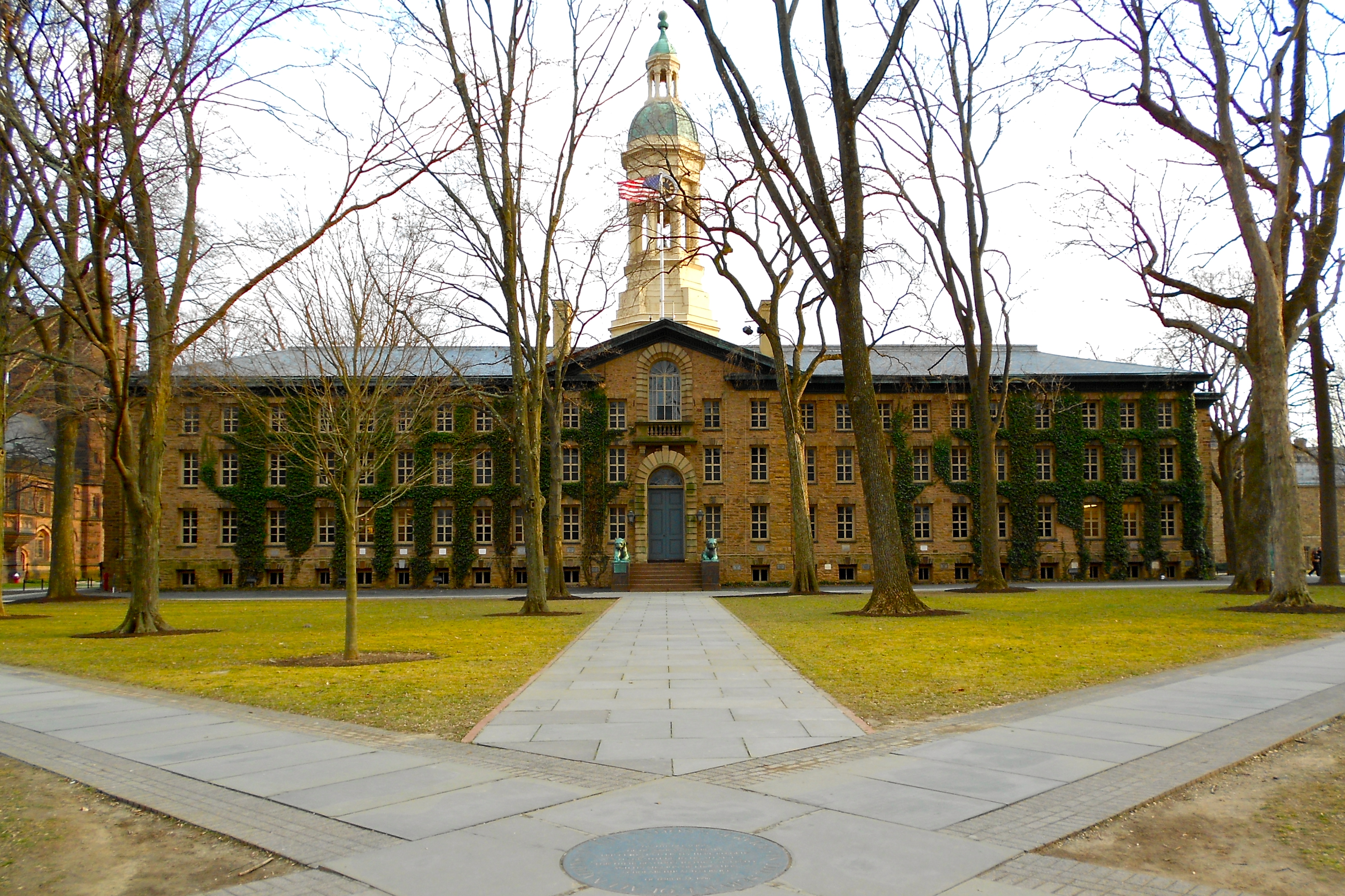
A TALE OF TWO COLLEGES


This is a story of two American Colleges; the first is my alma mater and the second where I work. 

The first has an undergraduate enrollment of 5159, the second of 7023.

The first is on an historic campus with the oldest building dating to 1754; the second is on an historic campus opened in 1793 by George Washington.

The first has a student body that is 8% African-American and 9% Latino; the second has a student body that is 18% African-American and 24% Latino.

At the first tuition is $38,650; for the second, tuition for a full-time student is $5106.

The first has an endowment of $17 Billion; the second has an endowment of $5.2 Million.

The first has an endowment of $3.2 Million per student; the second, $740 per student.

The first is located in Princeton, New Jersey; the second is in Springfield, Massachusetts.

If you make a contribution to the first college, you will get a polite thank you.  If you make a contribution to the second, you will help change someone’s life.

Dear reader, you will have to decide which institution is most worthy of support.


Tuesday, October 23, 2012

COLLEGE STUDENT DEBT INCREASES AGAIN

College student debt continues to increase at a rate of 5% a year as the Project on Student Debt reported last week that the bachelor degree graduates of the class of 2011.  PSD found the 66% of all graduates leave college with debt that averages $26,600.  This debt both federal and private loans is a burden on new graduates as they seek jobs in a very difficulty economy. 

The debt per student varies greatly by state and college from a high of $32,440 for New Hampshire and a low of $17227 in Utah.  Massachusetts comes in at 14th from the top with an average student debt of $27181. 

Because of “reform” of the bankruptcy laws student loans are now not dischargeable, that is an individual who declares personal bankruptcy can have her credit card loans wiped out but not her student loans.  Because of this change in bankruptcy law, Nobel prize winning economist Joseph Stiglitz in his book the Price of Inquality argues that student debt is creating “partially indentured servants.”  This refers to the practice during American colonial times of individuals agreeing to servitude in the new world for a period of usually seven years in exchange for a loan to carry them to the new world.  


Monday, September 24, 2012

UGANDA: IMPRESSIONS OF AN OUTSIDER

For three months I lived and worked in Uganda as a volunteer for the National Association of Professional Environmentalists (NAPE) from the United States.  I came to Uganda because I believe it is important for people in the North to act in solidarity with people in the South.  Also I was curious to learn the answers to the following questions:

·        What are the people in Uganda like?
·        What is the experience of living in Uganda? 
·        How is Uganda handling the threats to the environment – climate change, deforestation, water pollution, sanitation, mining and oil extraction?
·        How has Uganda progressed in the fifty years since independence?

Uganda will celebrate its fiftieth anniversary as a nation on October 9, 2012, sparking discussions about the country’s future.  As an outsider, perhaps I can add a different perspective to the debate about where Uganda should be heading.  My comments are based on personal observations, research and discussions with many Ugandans that I have had the opportunity to meet including school teachers, environmentalists, members of the media, shopkeepers, students, villagers employed in agriculture, and governmental officials.  Here are my observations and conclusions:
Kob in Murchinson Falls National Park, Uganda. The park straddles the Nile River, the world's longest that runs through ten countries: Burundi, Rwanda, Uganda, Tanzania, South Sudan, Sudan, Ethiopia, Kenya, Democratic Republic of the Congo, and Egypt.  Uganda is home to many lakes and rivers including Victoria, the world's second largest freshwater lake.
Uganda is a land blessed with a wonderful climate and abundant natural resources.  The bounty of nature in Uganda was a delightful eye-opener to me.   The weather is marvelous, warm sunny days, comfortable nights broken by rain showers.  In most of Uganda plentiful rain keeps the countryside green all year round, ideal weather for growing a large variety of grain, vegetables and fruit.  Native hardwood forests still survive in Uganda and the country is fortunate to have many large fresh water lakes that provide fish and water to local communities.  The world’s largest river, the Nile, begins in Uganda and the country has magnificent areas for wildlife. 

While I could praise further the natural beauty and richness of Uganda, I am concerned about the destruction of this heritage that should be used to sustain future generations.  Much of the hardwood forests have been cut down to make way for extensive agriculture including large scale sugar and oil palm plantations.  Lake Victoria and many other lakes are being damaged by pollution from human, and industrial wastes as well as pesticides and fertilizers.  Climate change poses a special risk to Uganda because the country is dependent on agriculture as a basis for its economy.  Unpredictable rain from climate change could translate into the diminishment of agricultural production.  There could be hunger where there was plenty. 

Along Entebbe Road, a worker in a metal
 fabrication shop making brackets for a bedframe.
The Ugandan citizens that I have met are hardworking, kind, entrepreneurial and ambitious.  I can’t say enough about the spirit, inventiveness and determination of the Uganda people.  As I walked each day along Entebbe Road from my home in SSeguku to the NAPE offices near the Zana circle, I saw young men fixing bicycles and boda-bodas using simple tools, workers welding doors and gates, women selling fruit and vegetables from small stands, men making chapatis and Rolexes over charcoal fires, workers handcrafting furniture.  And I witnessed young children dressed in their school uniforms accompanied by older siblings and parents going off to school.  These youngsters were polite and looked eager to learn.

For Uganda to grow and prosper, hard work must be supported by education.  This idea is echoed in the  Swahili proverb, “Wealth, if you use it, comes to an end; learning, if you use it, increases.” Uganda has expanded public education with the Universal Primary Education act of 1997 when education at public cost became available for four children per family.

My Uganda colleagues, however, voice concerns about the quality of public education and the need for more schools, and more better prepared and paid teachers. With a very young population – half of the population is 15 or younger – improving education should be, I believe, the country’s top priority to unlock economic progress.

The Gini Coefficient is the accepted
measure of income inequality. The
higher the number the greater dis-
parity of income among the
population.
Because of Uganda’s low average yearly income, when I arrived in the country I expected to see many people struggling to make ends meet.  But I was surprised to see expensive homes on the top of the Kampala’s hills and luxury cars on the streets. Figures, in fact, show that income inequality in Uganda rivals that of the United States. Uganda should not copy the US model of development that has led to an increasing gap between rich and poor. In Uganda the poorest 10% of the population receive just 2.3% of all income while the top 10% received over 36%. In the United States the figures are similar: the bottom 10% receive 2% of the income; the richest 10% take in 30%.

In the USA, income inequality has increased markedly over the past two decades with most of the new wealth concentrated in the top 1% of the population.  The United States, among the very richest countries in the world, now has many people who are homeless and many that do not receive proper medical care. Moreover, income inequality distorts the political process as the wealthy have the means to influence governmental action by funding the campaigns of political parties – both the Democrats and Republicans.  If Uganda follows the US model of economic development, it faces the danger of replicating the problems that accompany it.

Uganda at fifty is still a young country full of possibilities.  Uganda citizens should use this anniversary to reflect on the kind of future that they wish for their children.  My hope in the years to come, Uganda's natural resources will be protected, education will be supported and income inequality reduced.



Friday, September 21, 2012

ASSOCIATE DEGREES LEAD INVESTMENTS

Source: the Brookings Institute

A study by theBrookings Institute tried to answer the question: Where is the Best Place to Invest $102,000 -- In Stocks, Bonds, or a College Degree?  Well, my students don’t have that kind of money, but if you could borrow it, where would be the best place to invest?

By comparing various investment alternatives since 1950 –stocks, corporate bonds, treasury bills, gold, housing, higher education, they came up with an answer which is …..a college degree.  Yes, a college degree, over the long term, will result in greater income gain than any of the other alternatives.

So, college is a good investment for the individual and for our country.  And an associates degree leads the pack.

However, this financial analysis leaves out an important difference between, for example, buying stock and going to college.  The first requires money and patience for the stock to gain value.  The second requires effort - studying, writing, researching, putting off other activities, cutting down on outside work.  A student who goes to college invests in herself/himself by learning new skills and habits of thought.  

The decision to go to enroll in college is one of the most important in a young person's life.  And the rewards of obtaining a degree will last a lifetime.

Tuesday, September 18, 2012

CLEAN WATER FOR UGANDANS

From Joint Monitoring Program of the UNICEF/World Health Organization.  Africa stands out as the continent most lacking in improved water for its people.
Safe water for drinking and cooking - vital for human life - is a critical problem in the developing world. The map above shows that fact - the lighter the color the greater the fraction of the country's population without safe water that is easily accessible. ( Easily accessible according to the World Health Organization means within 1 KM, 6/10 of a mile. One may still have to walk to get water by up to 20 minutes – each way.) Africa clearly is the continent most at risk and Uganda, close to the center of Africa, shares that fate.

Throughout Uganda, many people carry water in large plastic jugs, often for long distances.  In my neighborhood I observe each day children and women filling those jugs from a source of water that does not appear secure and safe.  And every westerner who comes to Africa is told, “don’t drink the water – unless it is first boiled or is commercially bottled water”.

The organization where I am volunteering, the National Association of Professional Environmentalists, just completed a study about the supply of clean water in Uganda.  They found that:
·       Uganda has an abundant supply of fresh water
·       over nine and a half million (9,500,000) Ugandans of a population of thirty-four million (34,000,000) do not have “improved water”, - clean and safe water that is easily accessible;
·       Uganda has made progress toward its Millennium Development Goal of reducing by half the number of its citizens without “improved water” by 2015.  However, recent figures show a reduction in the fraction of the population with improved water from 67% to 65%.

While Uganda and other countries have, with the assistance of development partners, made significant progress over the past two decades, much more needs to be done to carry out the 2010 statement of the United Nations Human Rights Council:

 “The human right to safe water and sanitation is derived from the right to an adequate standard of living and inextricably related to the right to the highest attainable standard of physical and mental health as well as the right to life and human dignity” 

The pictures below will document the problems faced by many Ugandans to get clean, safe water to drink:

Borehole that serves Kangugo Village, Luwero, Uganda
Children getting water from the borehole.


 Children and women gather water from a water source in Nakawa-Kinawataka District, Kampala.

The same water source from another angle.


Monday, September 10, 2012

ROAD DANGERS IN UGANDA

Traffic on Entebbe Road, - no place for pedestrians to walk.
After my own small accident (see posting of September 8), I wanted to find out more about the level of injury and death due to vehicles both in Uganda and neighboring countries.

The graphic below shows the rate of traffic deaths worldwide by country with the developing world and especially Africa with the highest rates (red on the map below).  The US rate, by the way, is 13.9 which puts in above many European countries; Great Britain, for example has a rate of 4.8.

The map above shows road traffic deaths per 100,000 people per year with the red countries having the highest rates (over 30) followed by green (over 20).  Uganda's rate is 34.7.  Source: Worldlifeexpectency.com -road traffic accidents.
In Uganda there are multiple reasons for the high rate of death and injury on the roads: "Roads in developing countries often have mixed traffic, poor illumination, and sign posting, poor maintenance, and roadside hazards." (African Health Science article)   Another study looked at trauma cases in a Kampala hospital found that road traffic injuries were the greatest cause of trauma and that " pedestrians, especially children and adolescents, the most affected group".

I leave with some pictures to get an idea of the conditions here.
Downtown Kampala.


People riding boda-bodas in Kampala.  RFI/Gloria Nakiyimba


The taxi park in downtown Kampala, a destination point for many people taking public transit.